

Business Central Budgeting Without Buying Another Platform


The pitch for a dedicated FP&A platform sounds reasonable until you price it. Vena, Prophix, Datarails, and Planful all promise the same finished state: budgets, forecasts, and variance analysis in one place, refreshed and shareable. What they don’t lead with is the cost of getting there. The contract is annual and rarely small, the implementation runs weeks to months and often overruns, and Planful-class deployments tend to come with multi-year terms. Before a finance team signs any of that, they should understand what Business Central budgeting already does in the tool they own. Most of the budgeting, forecasting, and variance work those platforms sell can be built in Excel on live BC data, which means the platform is mostly buying a place to put work you can already do.
What an FP&A platform sells you
Strip away the category language and an FP&A platform offers three things: a database to hold your plan, a modeling layer to build it, and a distribution layer to share it. The database is the part finance teams overvalue. It exists because the platform needs somewhere to stage ERP data on a refresh schedule, which is also why the numbers you model against are a snapshot rather than the current ledger. The modeling layer is real value, but it’s a proprietary version of formulas and grids your team already knows from Excel, taught through training and maintained by a consultant when the structure changes. The distribution layer is genuinely useful and genuinely commoditized. None of the three requires leaving the spreadsheet, and the first one actively works against you by inserting a staging step between the ERP and the plan.
The budget BC already stores
Business Central holds G/L budgets natively. You can create a budget by dimension and period, and you can export it to Excel and import it back, so the round trip exists out of the box. The limit is what happens between exports. The native budget is a static table: it captures a number agreed at the start of the year and holds it there, and updating it means another export, another edit, another import. That works for a budget set once and left alone. It breaks the moment finance wants the plan to move, because every change is a manual file handoff rather than a live edit. The capability is there. The connection that would make it current is not.
Business Central budgeting starts with live data, not a new database
The fix is a live connection from Excel to Business Central rather than a second database alongside it. With Velixo, the workbook reads BC data through the API under your Microsoft sign-in, so the actuals feeding a model are the current ledger on refresh instead of last night’s load. That single change is what separates a working FP&A process from a stale one. A budget-to-actual report built this way doesn’t need a re-import to stay accurate; you press refresh and the actuals are today’s. When a number looks wrong, you right-click the cell, choose Velixo and then Drilldown, and follow it to the underlying transactions in BC without leaving the sheet. The plan and the ledger stay tied together because nothing sits between them. An FP&A platform charges you for a database precisely to avoid this, then makes the staleness it introduces your problem to manage.

Forecasts that change without a re-import
Budgeting is the easy half. Forecasting is where a static file falls apart, because a forecast is supposed to change. A mid-year reforecast, a rolling twelve-month view, a quarterly update against fresh actuals: each one is a new version of numbers that already live in BC. When the model reads live data, the actuals roll forward on their own and you reforecast the remaining periods on top of them. The new figures then go back to Business Central in bulk through writeback, posted as a budget version rather than re-keyed line by line through the budget screen. That writeback is the piece almost no comparison accounts for. The FP&A platforms keep the plan inside their own walls; getting it back into the ERP is a separate integration, if it’s offered at all. Here the forecast you build in Excel becomes the forecast of record in BC, in one action.
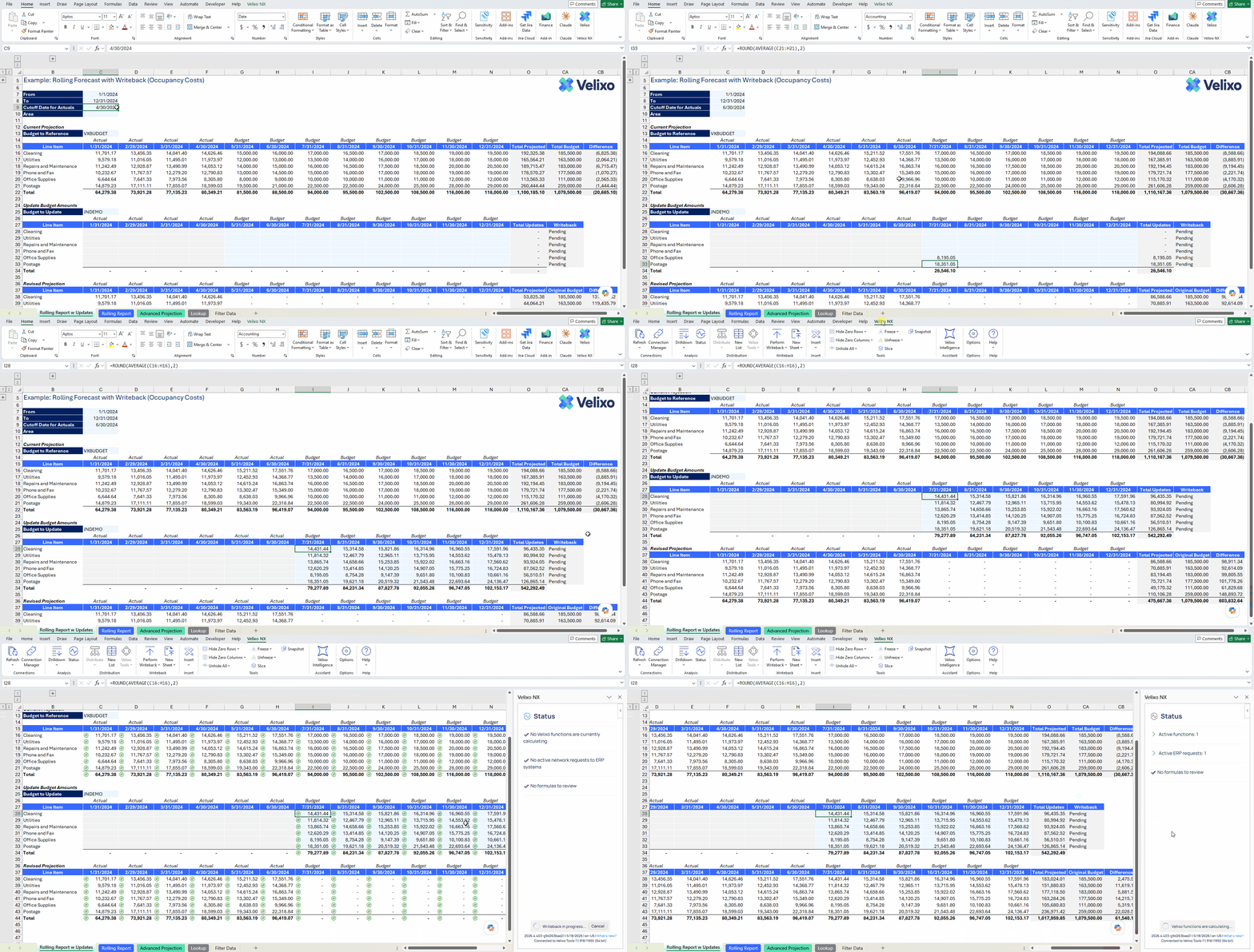
Roll a projection forward and write back a new forecast, all from within the same working file.
Business Central budgeting without the implementation
Variance analysis is where the budget and the forecast earn their keep, and it’s the cleanest demonstration of what live data buys. A variance report that pulls current actuals from BC, compares them to the budget version also stored in BC, and calculates the gap with drilldown to the transactions behind each line is the monthly deliverable controllers rebuild by hand everywhere else. Built once on a live connection, it refreshes instead of rebuilding. Put the three together and budgeting, forecasting, and variance run inside Excel and Business Central with no separate platform, no staging database, and no implementation calendar. Velixo inherits your BC permission sets and logs every writeback to the audit trail, so doing this in the spreadsheet doesn’t trade away the control a platform claims as its reason to exist. The honest case for buying Vena or Prophix is convenience and a few capabilities at the edges. For most mid-market teams already living in Excel, the FP&A work was never the part that needed a new system. Learn more about Velixo for Business Central.